Siemens Mobility
With the department of Strategy & Digitalization at Siemens Mobility, we worked in the following challenge: "Making transport more accessible and inclusive for passengers".
The Team


The Challenge
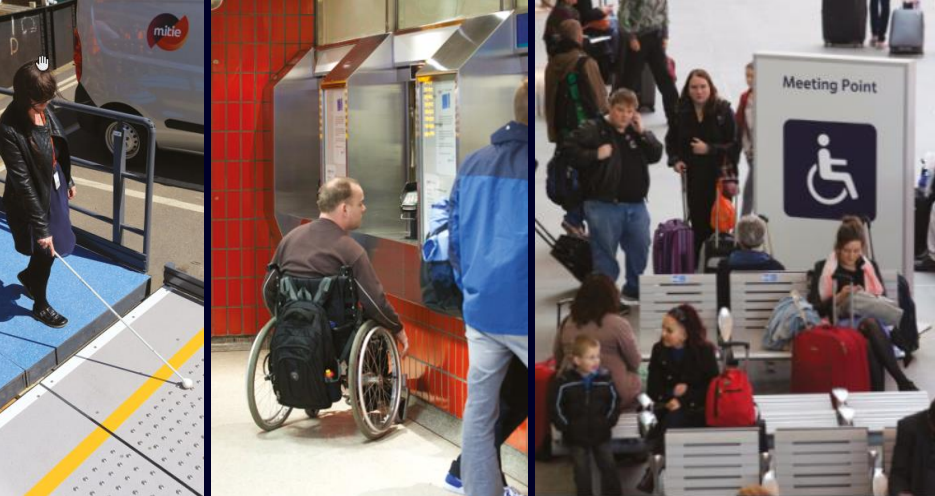
"Making transport more accessible and inclusive for passengers."
Target groups
Passengers with special needs (deaf,blind,...) and additional needs (tourists, parents with kids…)
Scope

The whole passenger journey
Siemens' expectations
They expected from the team to do a market and competitor analysis and to propose a holistic overview that answers both the challenge and the following specific questions:
• What are current trends and best inclusive mobility practices that are leading the worldwide market in this sense?
• What are the best inclusive mobility practices of our competitors in the railway market?
The objective of this project was to, at the end, receive a proposal of concrete initiatives to be carried out by Siemens Mobility Spain for the target groups to contribute to overcome barriers, which make it impossible or unreasonably difficult for these groups of people to use the urban mobility service.
• What are current trends and best inclusive mobility practices that are leading the worldwide market in this sense?
• What are the best inclusive mobility practices of our competitors in the railway market?
The objective of this project was to, at the end, receive a proposal of concrete initiatives to be carried out by Siemens Mobility Spain for the target groups to contribute to overcome barriers, which make it impossible or unreasonably difficult for these groups of people to use the urban mobility service.
Research
Method
We first started with a preparatory research, which focused on understanding the market and companies outside of Spain that provide mobility services.
On the secondary research, which looked into accessibility trends in different industries, public data on transportation, legal and public mobility.
For the primary research, which involved speaking with experts, individuals with reduced mobility, public transport users, and conducting a service safari.
On the secondary research, which looked into accessibility trends in different industries, public data on transportation, legal and public mobility.
For the primary research, which involved speaking with experts, individuals with reduced mobility, public transport users, and conducting a service safari.

Research Method
Preparatory Research
The preparatory research encompassed mapping the exchange of value, as well as identifying the pains and needs of stakeholders and competitors within the transport ecosystem.
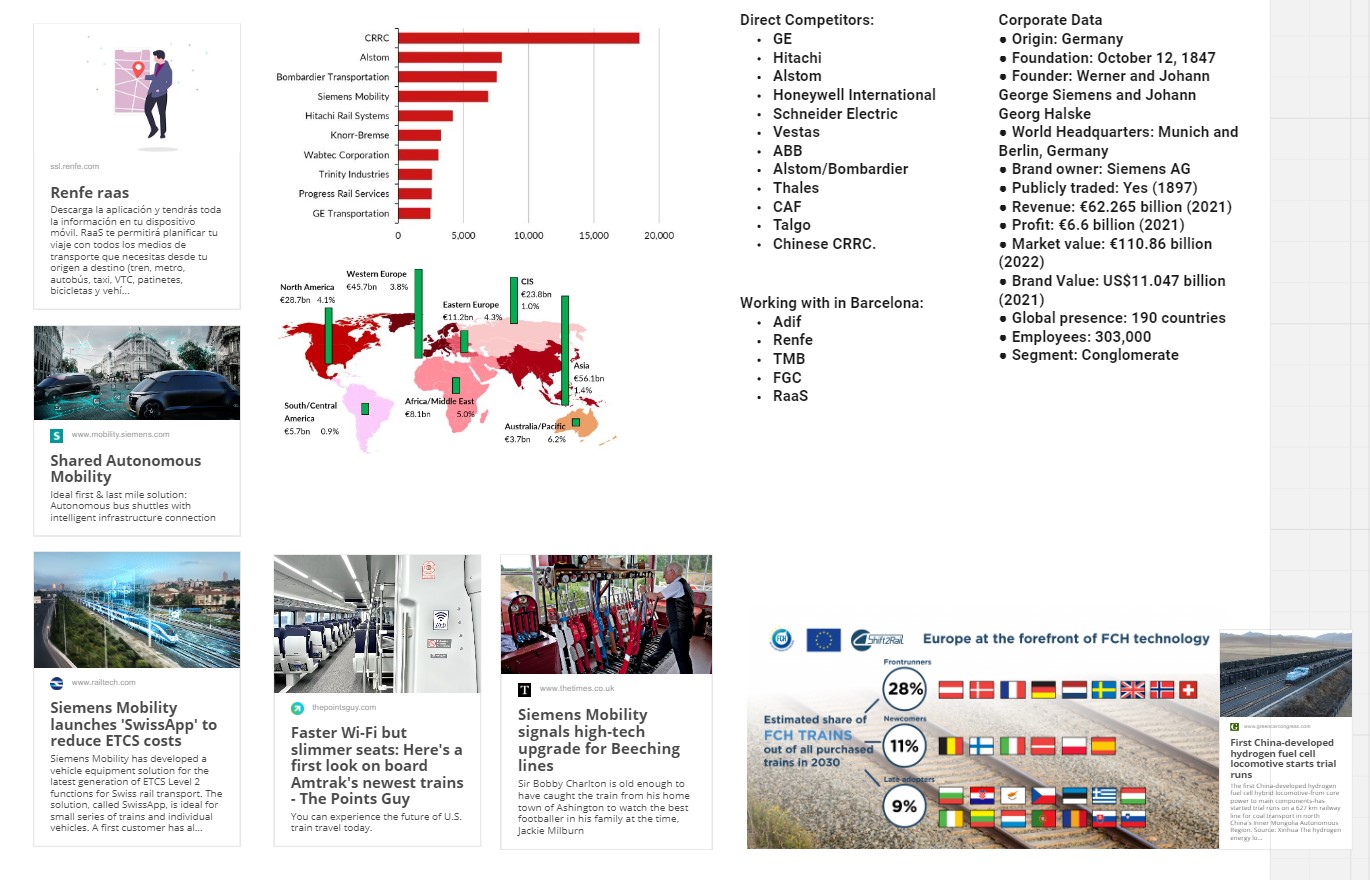
Understanding Siemens & the challenge
Secondary Research
We conducted research using sources such as academic papers, reports, and existing data. Furthermore, we examined public data related to transport accessibility and passenger needs.
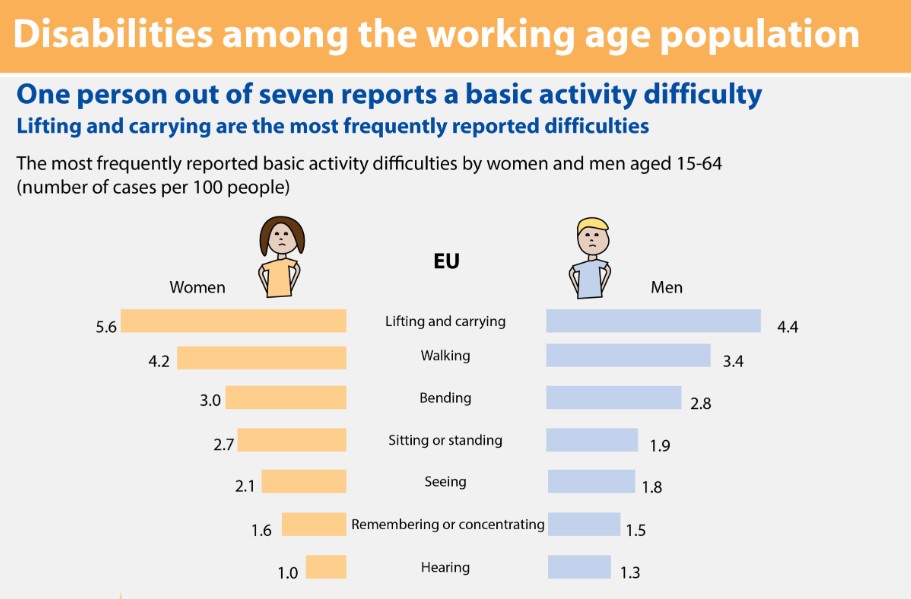
Understanding people w/ reduced mobility
Primary Research
Primary research
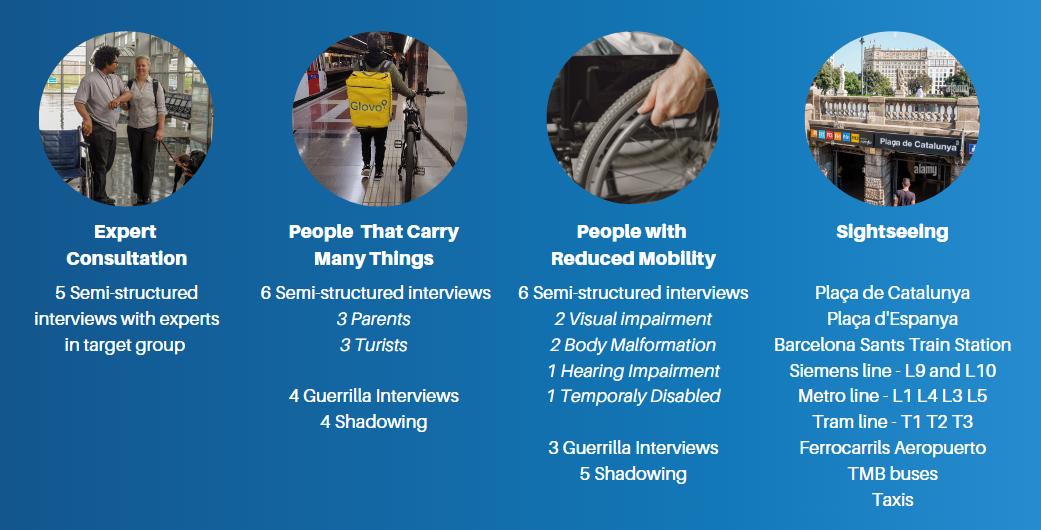
We conducted primary research with 33 participants, including experts, those with special needs (visual, body, hearing impairment, temporary disability), parents, tourists and commuters. For further insight, our service safari took us to a variety of transport environments. This gave us direct, invaluable insights for a comprehensive understanding of individual challenges with the transport system.
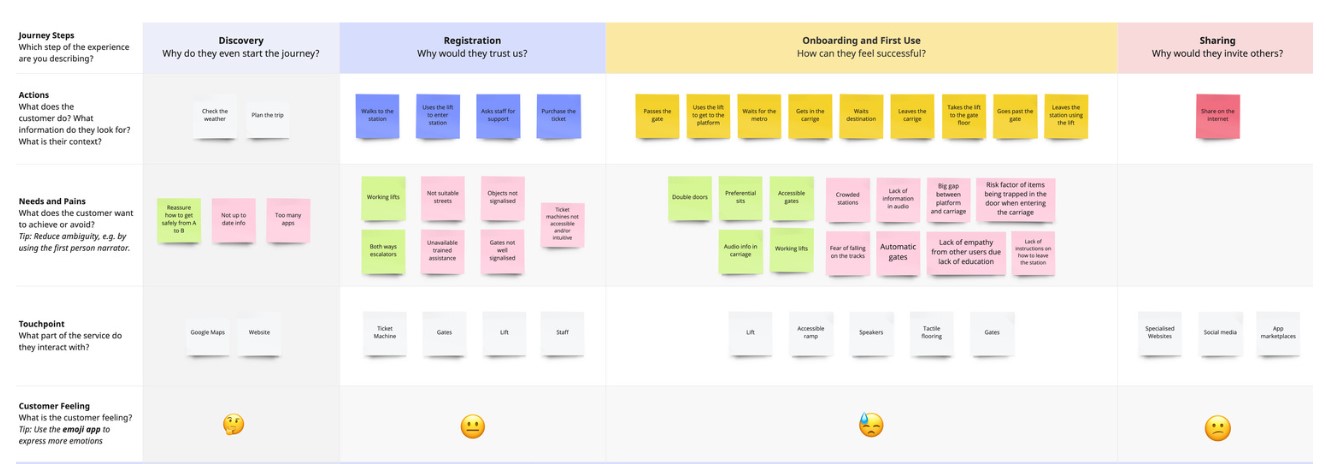
User Journey Map
Personas
Personas for the project were carefully created using research and findings from multiple methods. They depict real commuters experiencing difficulties using public transportation.
Javier, the visually impaired Music Director, seeks a simple and independent way to buy tickets and access real-time information without relying on others' help. Lucia, the wheelchair user and Senior Accountant, yearns for an easier way to plan her journeys, with real-time information on lifts and delays to move independently and safely around the city. Pablo, the hearing-impaired Business Owner, wishes for more visual content and travel updates for a quicker and more comfortable journey. Adla, the travelling mother of two, aspires to an effortless and budget-friendly travel experience that ensures her children's safety and allows her family to enjoy the journey together.
These personas play a pivotal role in developing the project. They humanize the project's target audience, helping the team to empathize with users and understand their pain points, aspirations, and expectations.
Javier, the visually impaired Music Director, seeks a simple and independent way to buy tickets and access real-time information without relying on others' help. Lucia, the wheelchair user and Senior Accountant, yearns for an easier way to plan her journeys, with real-time information on lifts and delays to move independently and safely around the city. Pablo, the hearing-impaired Business Owner, wishes for more visual content and travel updates for a quicker and more comfortable journey. Adla, the travelling mother of two, aspires to an effortless and budget-friendly travel experience that ensures her children's safety and allows her family to enjoy the journey together.
These personas play a pivotal role in developing the project. They humanize the project's target audience, helping the team to empathize with users and understand their pain points, aspirations, and expectations.
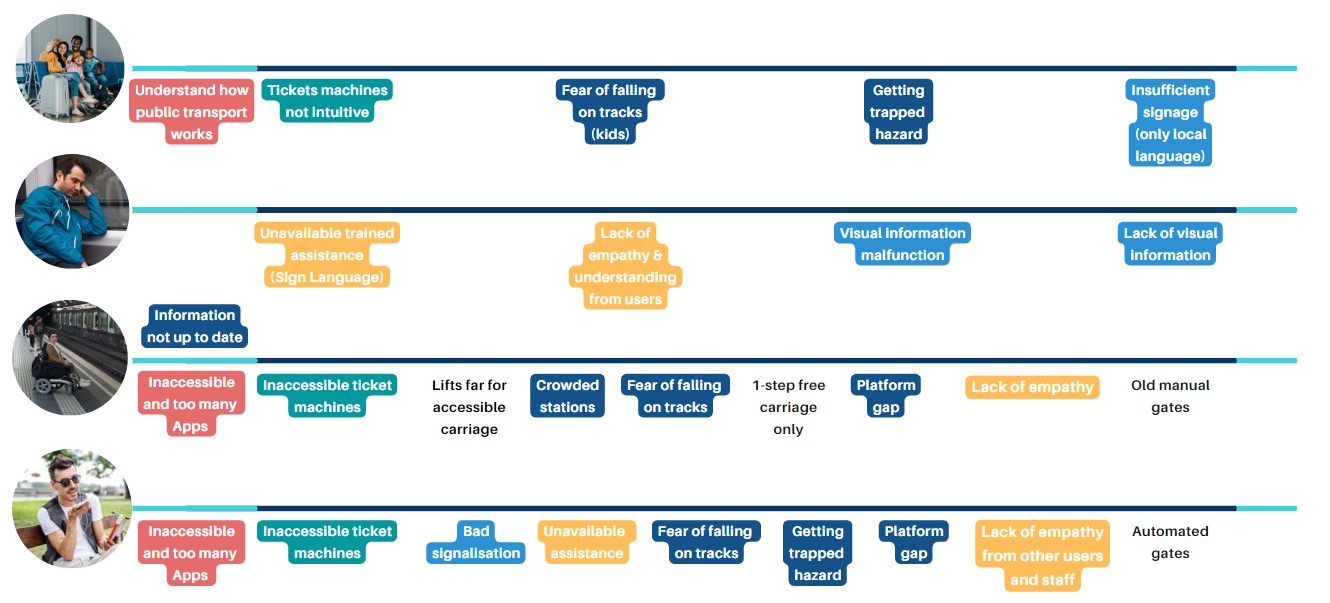
Persona's Pain Points Summary
Insights
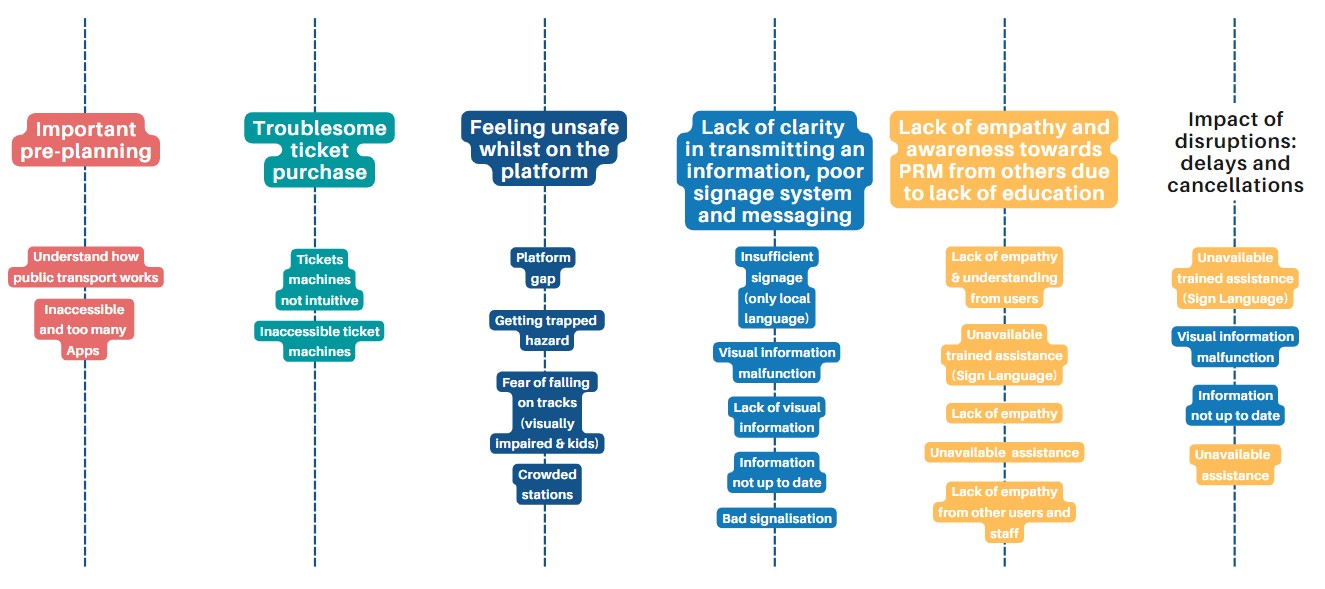
Pain points clustered
The insights generated from our research shed light on crucial challenges and pain points faced by passengers using the public transport system in Barcelona.
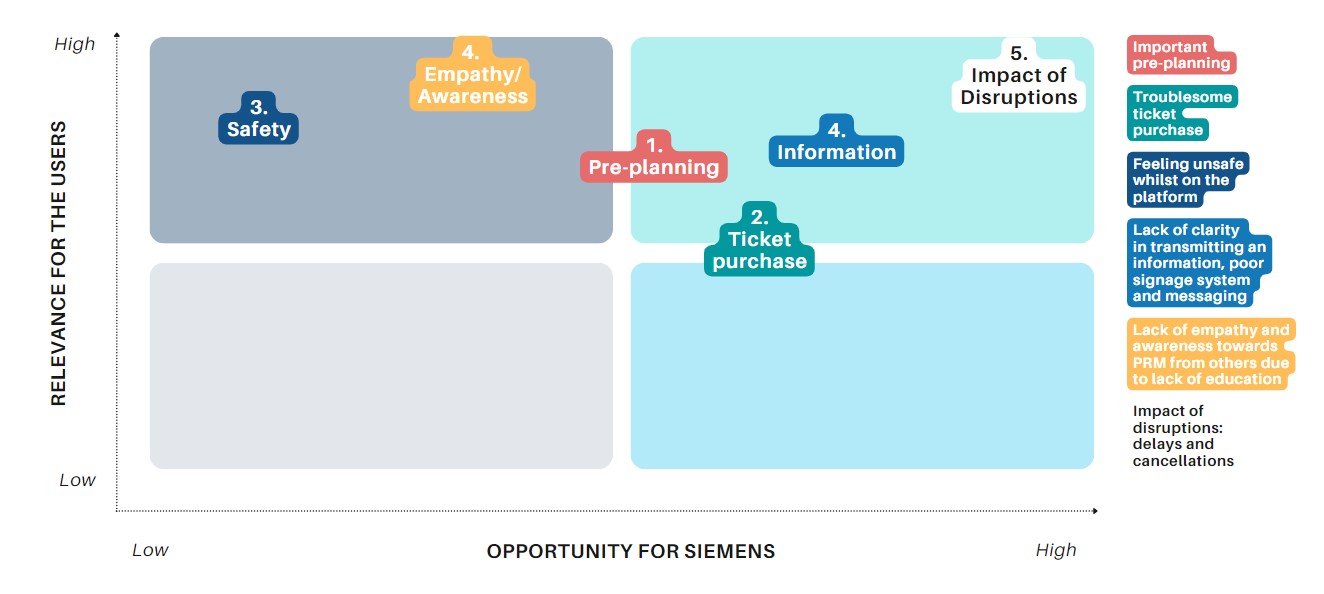
Opportunity Matrix
Focusing on the "Impact of Disruptions" in the opportunity matrix was a strategic decision that holds tremendous potential for Siemens Mobility's differentiation and user relevance.
Disruptions, such as delays and cancellations, significantly impact all commuters, with a particular understanding that they affect people with reduced mobility even more severely.
Disruptions, such as delays and cancellations, significantly impact all commuters, with a particular understanding that they affect people with reduced mobility even more severely.
Competitive Analysis
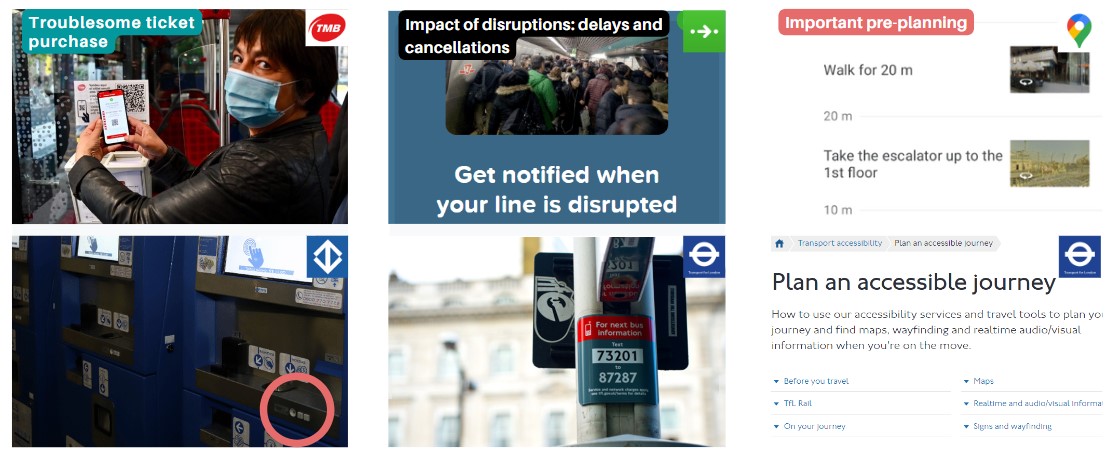
Solutions from the tech/transportation industry
Through this analysis, we identified trends and strategies used by diverse industries to tackle challenges similar to those faced by passengers in public transport. Industries such as healthcare, technology and hospitality provided valuable examples of how customer-centricity, personalization, and seamless user experiences can positively impact user satisfaction and loyalty. We explored digital solutions, accessibility features, and customer engagement initiatives that could be relevant and adaptable to Siemens Mobility's offerings.
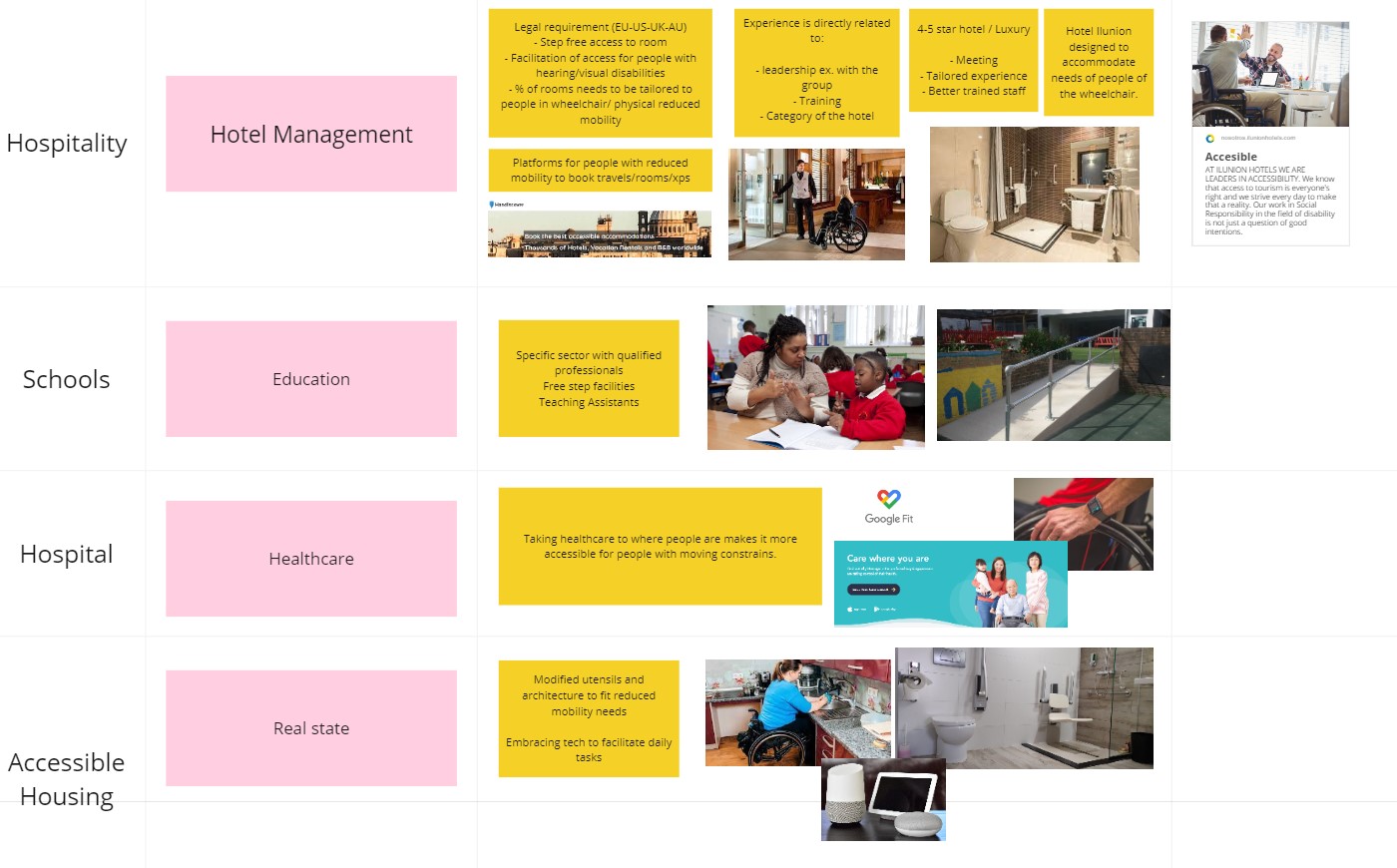
Solutions in other industries
Ideation
Method
We engaged people from the target groups and designers in diverse ideation methods, including co-creation, lotus blossom, crazy eights, future backcasting, and the evaluation matrix.
This dynamic brainstorming process sparked many innovative ideas, exploring future scenarios and addressing user needs and pain points.
This dynamic brainstorming process sparked many innovative ideas, exploring future scenarios and addressing user needs and pain points.
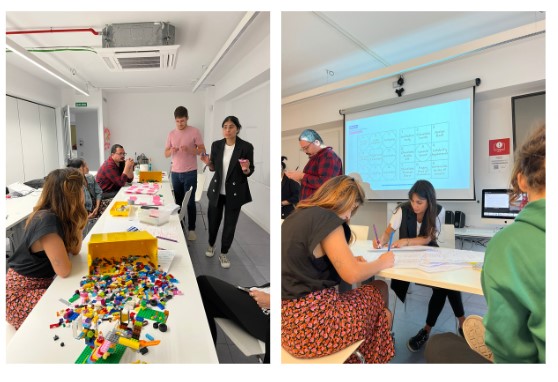
Co-Creation Session
How Might We?
During the ideation process, our team developed the central How Might We (HMW) question: "How might we improve and clarify information for a smooth journey?"
This HMW question led to the generation of focused questions, such as effortlessly guiding users with accessible information, providing relevant data anytime and anywhere, and explaining the intricacies of the public transport system.
This HMW question led to the generation of focused questions, such as effortlessly guiding users with accessible information, providing relevant data anytime and anywhere, and explaining the intricacies of the public transport system.
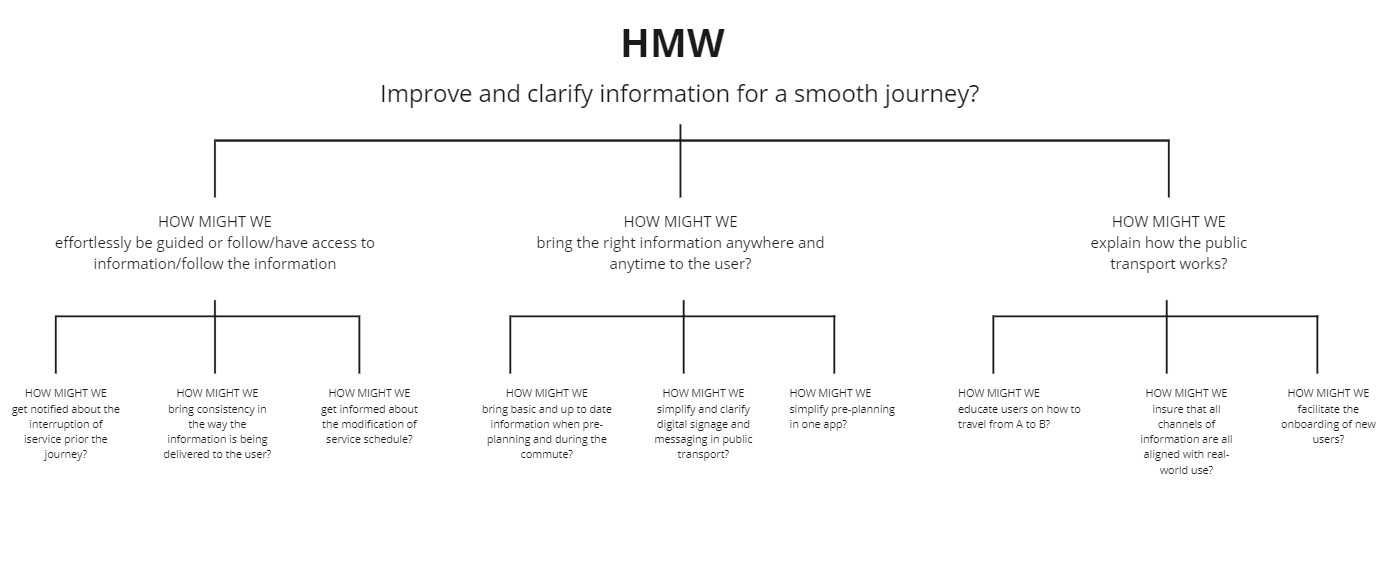
HMW Tree
Framing the Solution
We embarked on an in-depth research journey to delve into the technical aspects of Siemens Mobility's existing solutions and understand their vision for the future of transportation. By revisiting Siemens' expertise and know-how, we aimed to align our solution with their capabilities and leverage their technical strengths as a competitive advantage.
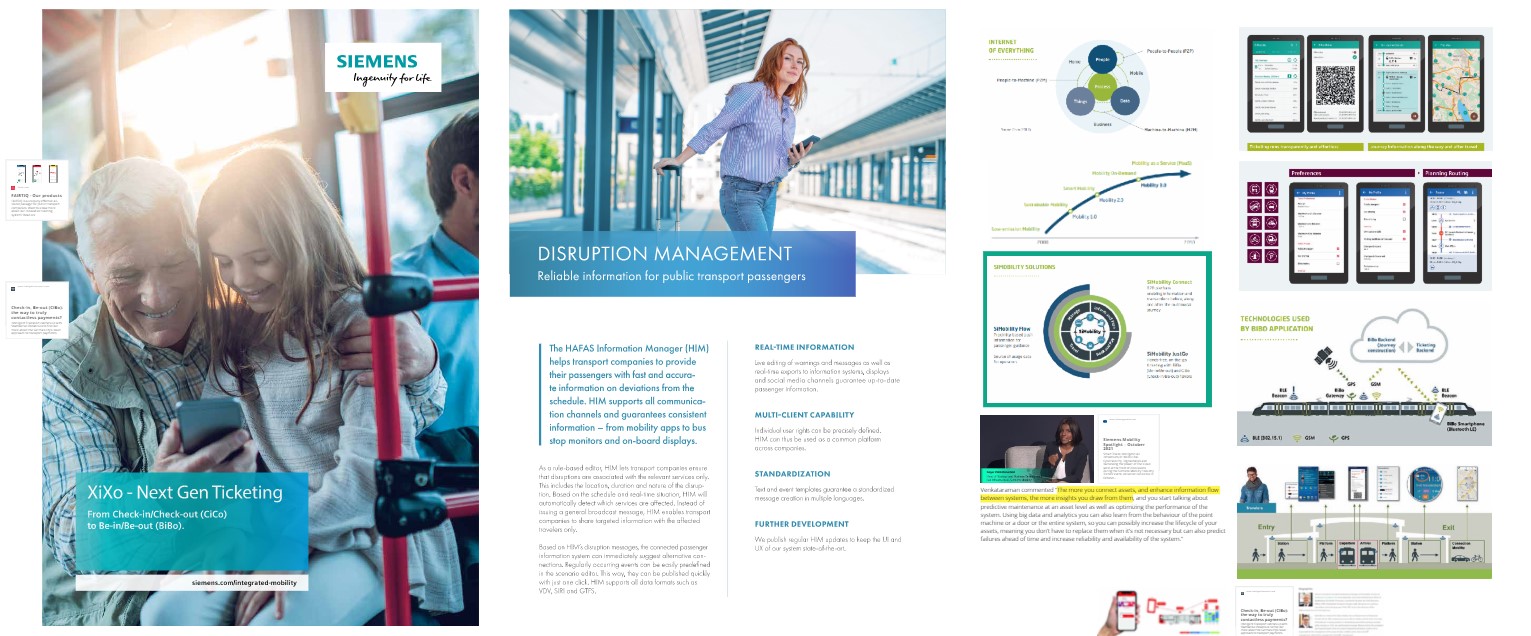
Understanding Siemens' MyMobility & XiXo Systems
A crucial realization emerged: the key focus should be integrating Siemens Mobility's tracking and ticketing system with a preference-based solution to support our target users in avoiding disruptions and experiencing a smooth journey. By leveraging Siemens' ongoing development in tracking and ticketing technologies, we envisioned a seamless and user-centric experience that would empower passengers to make informed choices based on their preferences and needs.
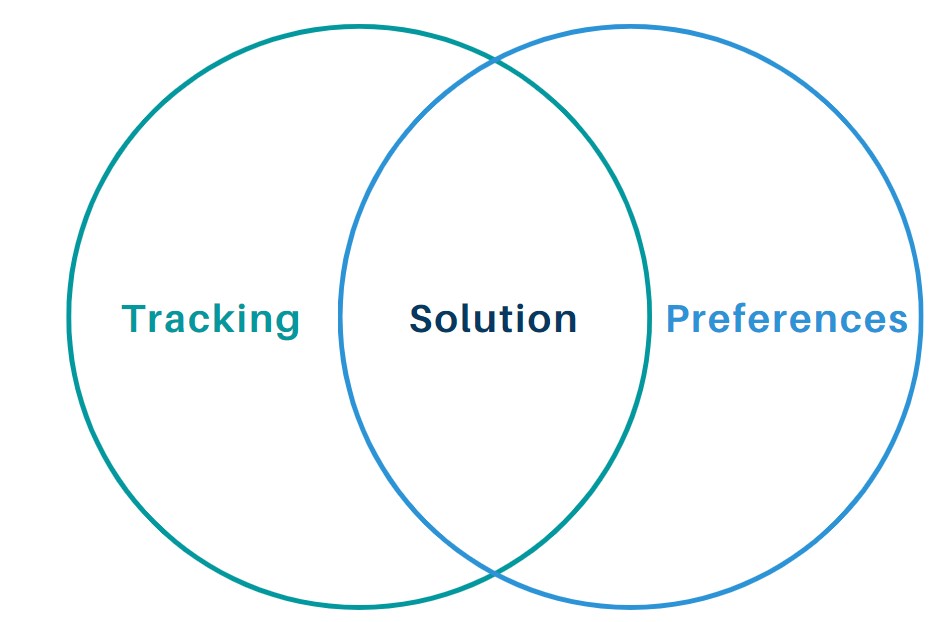
Solution
Summary
Our solution is inspired by Luxembourg's app developed by Siemens, where the absence of ticket gates allows for a smooth boarding process. Building upon the insights from the Luxemburg app, we have created a user-centric solution that prioritizes passenger preferences—leveraging Siemens' XiXo solution, which utilizes Bluetooth beacons and Wi-Fi to identify passengers.
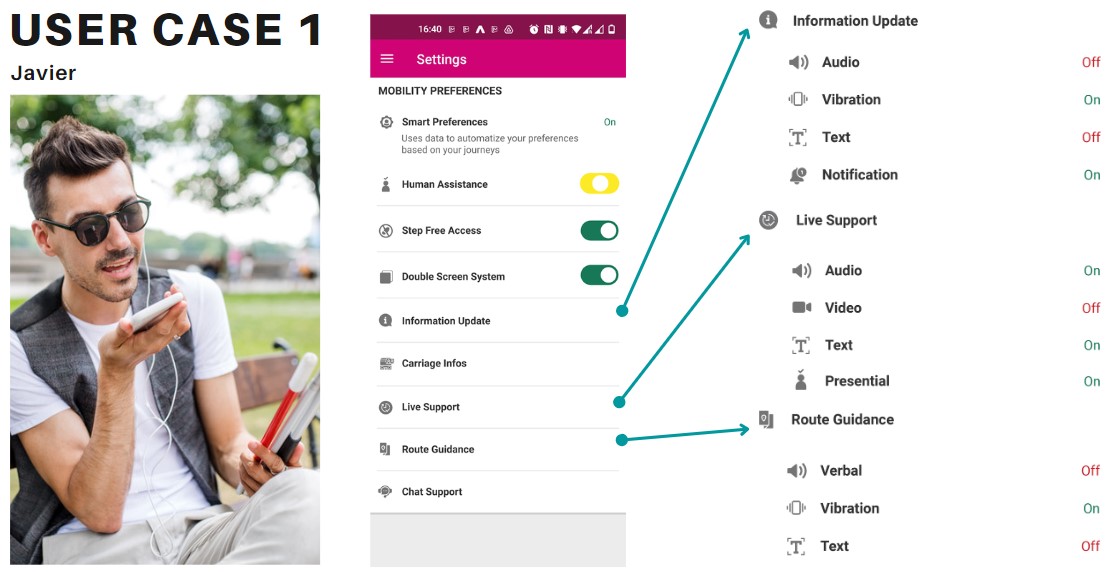
Javier's Preferences
How does it work
Our solution is a preference-based service that improves the urban mobility experience by providing users with seamless, hands-free commuting guidance and anticipates potential disruptions.
Leveraging technologies already integrated into smartphones, such as vibration, GPS, Bluetooth, GSM, and Wi-Fi, our system delivers personalized notifications tailored to each user's preferences. From suggesting the most suitable modes of transport to defining notification methods, our solution empowers passengers to enjoy a hassle-free journey without constantly checking their phones.
By anticipating disruptions and offering alternative routes or transportation options based on pre-defined or learned preferences
Leveraging technologies already integrated into smartphones, such as vibration, GPS, Bluetooth, GSM, and Wi-Fi, our system delivers personalized notifications tailored to each user's preferences. From suggesting the most suitable modes of transport to defining notification methods, our solution empowers passengers to enjoy a hassle-free journey without constantly checking their phones.
By anticipating disruptions and offering alternative routes or transportation options based on pre-defined or learned preferences
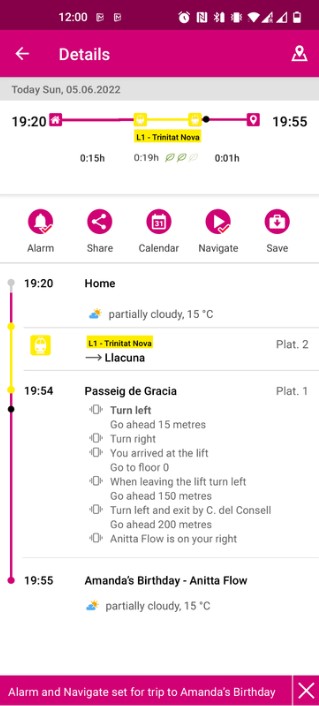
Javier's Use Case - Going to Amanda's Birthday
Our service goes beyond conventional urban mobility solutions. By seamlessly syncing with users' calendars, our system proactively notifies them of potential disruptions that may impact their travel plans. This proactive approach ensures that users stay informed and adjust their schedules accordingly, avoiding inconveniences. Additionally, our solution offers the option to book cabs for the user's needs if needed automatically.
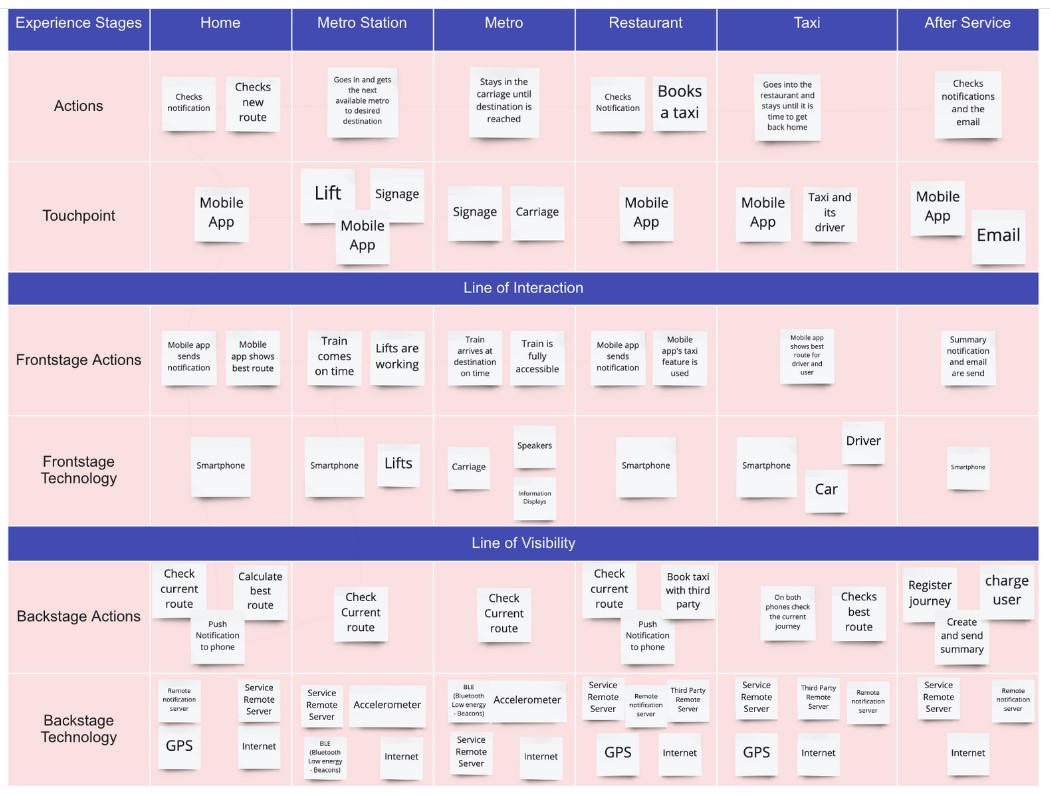
Service Blueprint for Javier's trip
Validation
Summary
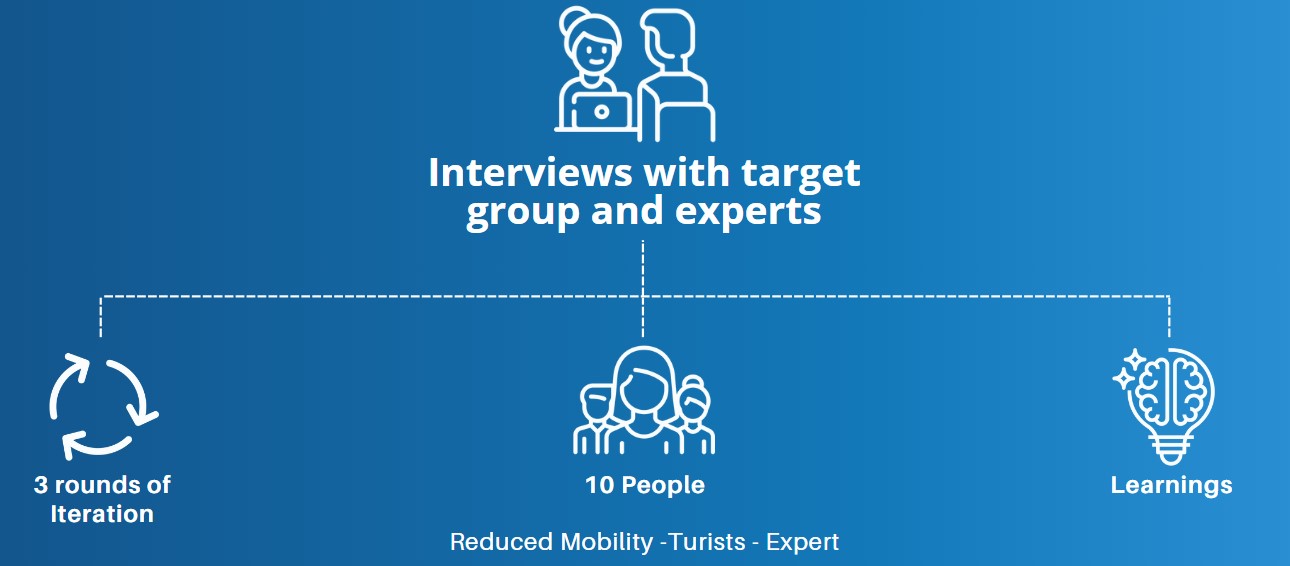
We went through three rounds of iteration, we gathered valuable feedback from a diverse group of 10 individuals, including passengers with reduced mobility, tourists, and experts.
Prototype
Our approach included developing different levels of app prototypes, storyboards, and service blueprints based on the specific needs of the users we were validating with.For some user groups, we utilized app prototypes to provide a hands-on experience, allowing them to interact with the service and provide valuable feedback on its functionalities and user interface. Storyboards were employed to visually illustrate the user journey and showcase how the solution would address their preferences and pain points.For other user groups, service blueprints proved to be more suitable for mapping out the end-to-end user experience and service interactions.
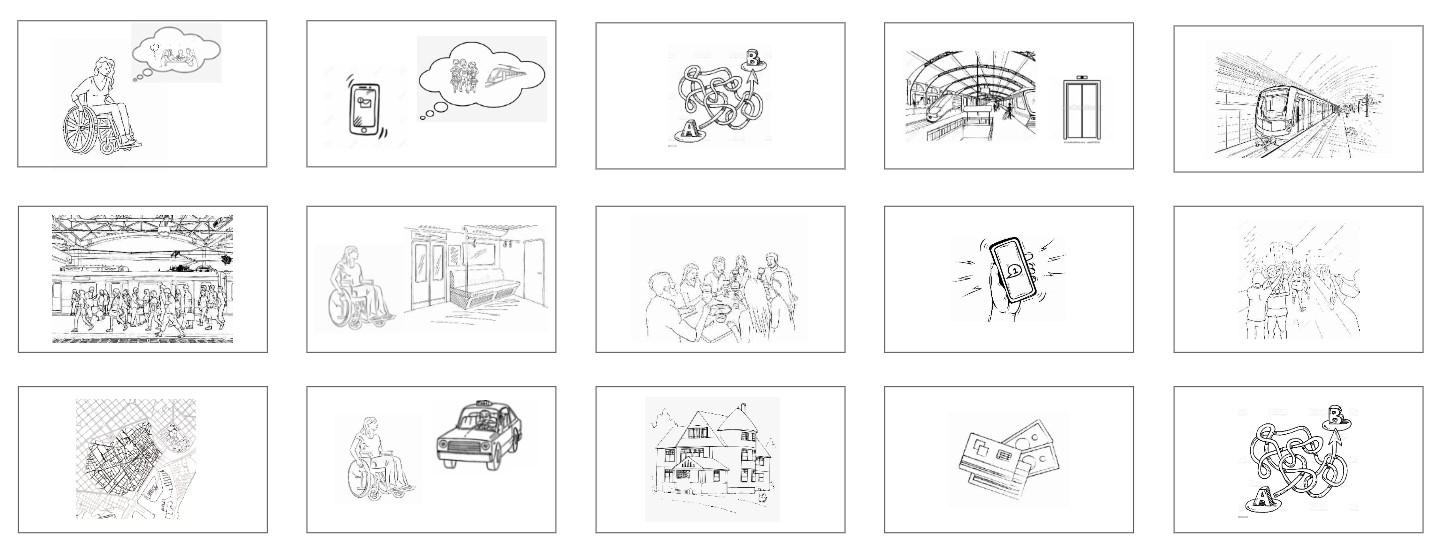
Storyboard Prototype
Iterations
1st
The need for practical guidance outside of public transport became apparent in the initial prototype. To address this, we implemented a comprehensive guide to assist users throughout their journey beyond public transportation. Additionally, the introduction of a widget provided a quick and convenient way for users to adjust settings without opening the app.
2nd
Based on user feedback, we learned that haptic feedback is essential to our audience to eliminate the need for users to expose their phones during their commute. This enhancement significantly improved the user experience by offering intuitive navigation cues without requiring visual interaction. Furthermore, we acknowledged that users preferred in-app permissions.
3rd
Trust emerged as a critical aspect of our solution. Users expressed initial skepticism about advanced functionalities being implemented in public systems.
Opportunities
For Siemens
Siemens' strong position in the market and emerging opportunities make it an ideal moment for them to embrace our new preference-based service. By incorporating this innovative solution into their existing MaaS initiatives and advanced digitalization technology, Siemens can offer users a cutting-edge and personalized urban mobility experience, differentiating themselves from the numerous competitors in this area.
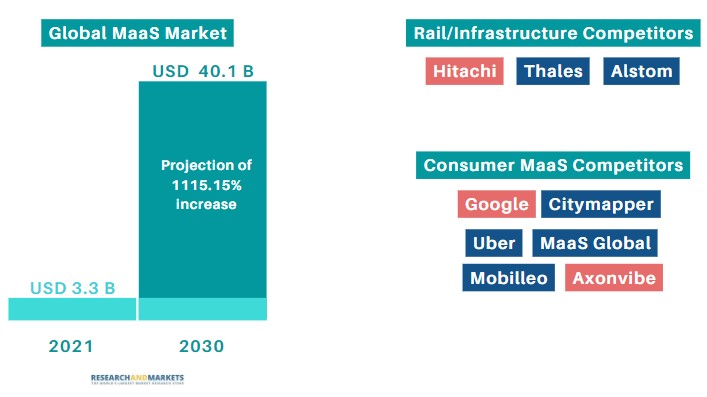
Growth of MaaS Market
For Users
Integrating our preference-based system with Siemens' XiXo system offers users a transformative opportunity by resolving various issues identified in our research. With personalized planning, streamlined ticketing, real-time information and empathetic design, users can experience a seamless and user-centric urban mobility experience. By aligning our innovative solution with Siemens' commitment to sustainable and advanced technology, this collaboration empowers users to navigate their commutes efficiently, securely, and confidently.
Takeaways
Summary
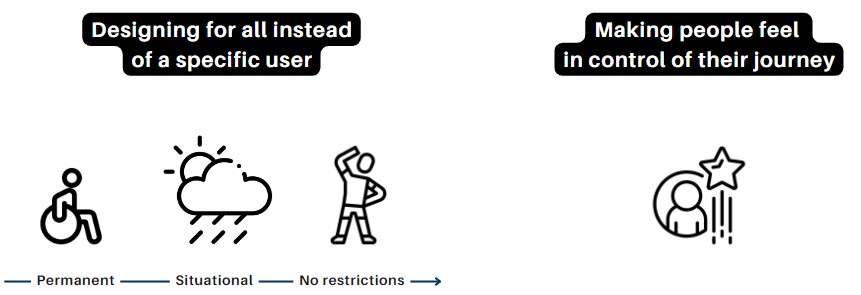
Firstly, the realization that reduced mobility is a universal experience, affecting everyone at some point in life, be it due to a temporary setback or unforeseen circumstances like inclement weather. Implementing the preference-based system can benefit all users, as it offers a seamless and personalized urban mobility experience catering to diverse needs.
Secondly, the power of empathy and information emerged as crucial assets for enhancing the user journey. Feeling in control of one's actions and journeys is essential for all users, and the combination of empathy-driven design and real-time information can profoundly impact their overall experience.
These insights underscore the value of developing solutions that prioritize inclusivity, personalization, and user-centricity, positively impacting urban mobility for everyone.
Secondly, the power of empathy and information emerged as crucial assets for enhancing the user journey. Feeling in control of one's actions and journeys is essential for all users, and the combination of empathy-driven design and real-time information can profoundly impact their overall experience.
These insights underscore the value of developing solutions that prioritize inclusivity, personalization, and user-centricity, positively impacting urban mobility for everyone.
Digital Tools

Documentation & visualisation of information

Interviews & meetings




Presentation